Wired for Connection
What Neuroscience Says About Why Your Marketing Isn’t Working
By Jason Pohl
How important is human connection in marketing? Isn’t marketing simply about getting people to think and feel a certain way, so they’ll buy something?
For me, human connection is a core value. And I believe it’s essential to effective marketing.
In the early 2010s I came across a new music discovery website called Noisetrade. After months of combing through emerging artists, some of which made my ears hurt, I stumbled upon a new folk/alternative musician named Josh Garrels. I was drawn to the depth and faith-infused poetry of his writing and the diversity of his raw musical style. His 2011 album “Love & War & The Sea In Between” was soulful, creative, and layered with fresh, modern rhythms, and it connected with a wide range of people.
Sharing that discovery with friends and family was deeply satisfying, and it formed a unique connection with each person through our mutual appreciation of the music. It’s a small example of something we’re all wired for, and it says more about marketing than you might expect.

Wired for Connection
My wife has been interested in the brain science behind trauma and addiction recovery lately, reading books and listening to various podcasts. As we discussed the topic, I couldn’t help but consider how it applied to marketing.
Our brains are wired for human connection. Drawing on studies by Dr. Allan Schore of UCLA, a pioneer in interpersonal neurobiology, Dr. Jim Wilder developed a model that describes the relational engine that is wired into our brains from infancy. It operates at four levels:
- Attachment — recognizing others
- Assessment — evaluating safety
- Attunement — emotional resonance
- Action — responses that match who we are
These relational pathways, formed initially in childhood, shape how we respond to the world around us. Wilder describes the deep connection that results as Relational Joy, and explains how it can be interrupted by what he calls Enemy Mode: the brain treating a person or message as a threat instead of a connection, responding defensively rather than openly.
So How Does Human Connection Play Out in Marketing?
In a marketing context, when content or a brand communicates in a recognizable and welcoming format — a smiling person, a familiar place, a piece of music — it opens the way for initial attachment. From there, attunement to the messaging can begin to form, as long as assessment doesn’t raise any red flags.
If our brand messaging doesn’t ring true, it triggers the assessment part of our brain to evaluate whether the messenger is trustworthy. When a brand is perceived as transactional (“I think I’m being sold!”), or content is obviously AI-generated, the brain flips into defense mode instead of connection mode.
The following are three ways of leaning into generating relational joy through human connection:
1. People Photos
As I’m involved in marketing for architecture, it can be easy to focus on the material outcome of the work rather than the humans who helped create and shape it. Visually, we are naturally attracted to the presence of a human in the space that is being highlighted. The recognition of a person in a new environment lends toward a form of initial attachment, which can lead to emotional resonance (attunement) in the context of beauty, art, and architecture.
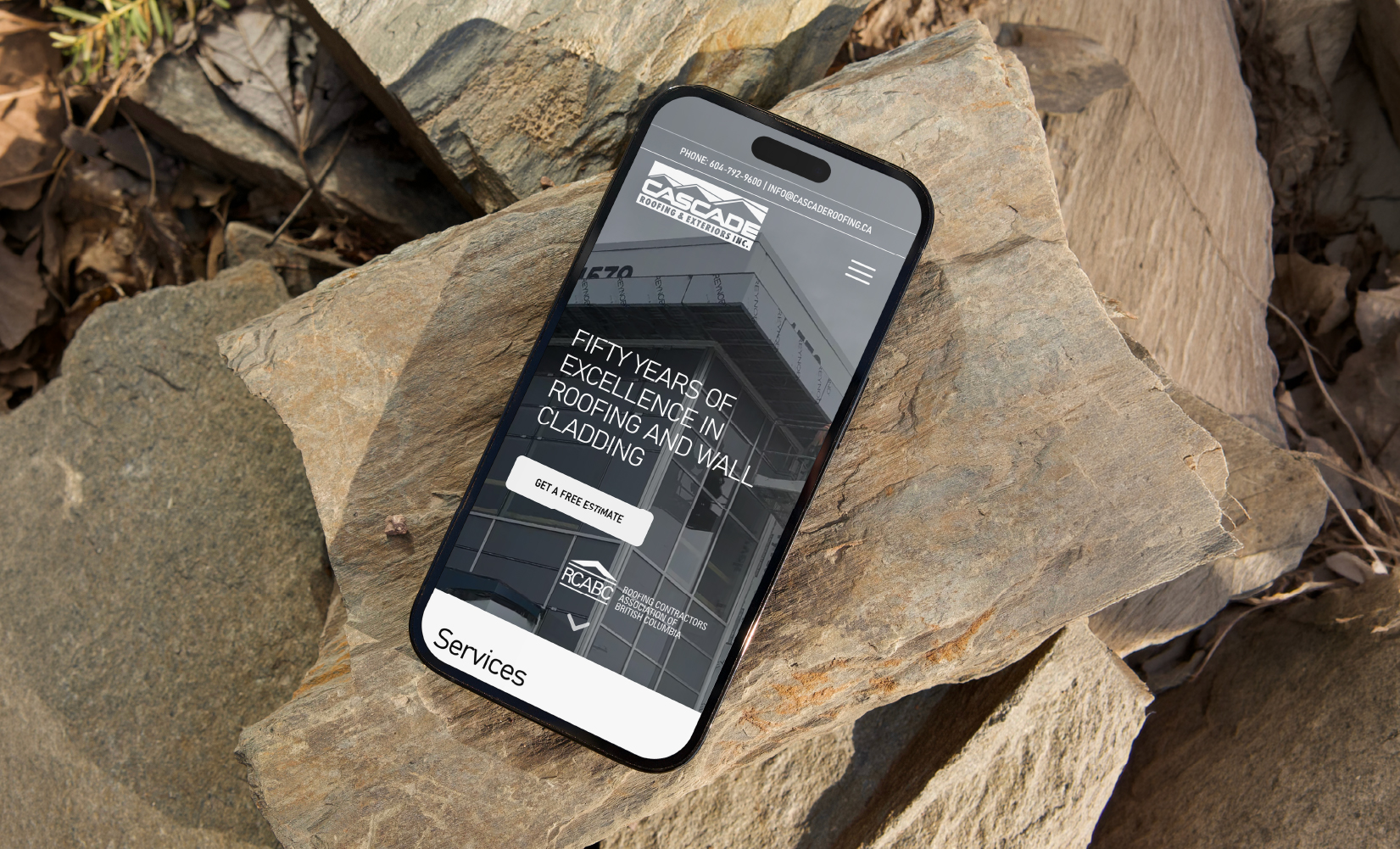
Patagonia’s activewear website features the smiling faces of younger and older people engaged in adventurous activity, inviting both attachment and attunement to lovers of the outdoors. When we recently rebuilt the website for Cascade Roofing & Exteriors, we intentionally included members of the team performing the company’s roofing services, rather than just the outcome of the work.
2. Stories
When connection is a priority, the story of the building or project becomes a focus on the humans who helped overcome challenges using creativity and innovation. Instead of a static outcome, the story behind the structure is what engages and draws us in.
We recently shared the story behind the Menno Hall at UBC, which is poised to begin housing residents in September 2026. Though the building is itself a model of innovative and responsible building practices with beautiful cross-laminated timber components, the wider stories of a generous gift and purposeful collaboration imbue the physical bones of that building with meaning and potential.
Engaging stories emerge from a perspective rooted in both curiosity and a view of the high intrinsic value of each person. It values the unique contribution each person brings into the world through their interests, passions, and personality. Similarly, every company brings to the marketplace unique values, approach, and skillset, which can be celebrated and offered as an invitation to connection.
3. Collaboration
A high point of Josh Garrels’ craft came through his collaboration with Mason Jar Music, a collective of young musicians from Brooklyn, NY. Together they produced The Sea In Between, a musical documentary shot on Mayne Island, BC, which is permeated with community connection and inspiration in the landscape, and elevated by the young musicians’ artistry alongside Garrels’ soulful vocals.
Digital marketing collaboration works the same way: the mutual telling of a story, web and video collabs, or social sharing all celebrate human connection. Social collabs on Instagram, or tagging collaborators on other platforms, don’t just multiply the reach of the brand message, they highlight the creativity, innovation, and problem-solving of everyone involved.
The project stories we tell for our clients have more depth and interest when they describe how creative collaboration with a partner or client helped overcome a challenge and achieve a result beyond what either could have accomplished alone.

Don’t Skip Expertise
Does focusing on human connection mean the technical expertise of the clients we market for isn’t important? Absolutely not.
The story is how competence becomes memorable. But it’s never a replacement for it.
Visual human presence, stories, and collaboration become the vehicles that let people actually feel the competence and care built into your work.
Our brains look for a reason to trust before they look for a reason to buy: a face before a floor plan, a story before a spec sheet, team accomplishments over a hero mentality. Skip these, and even excellent work can register as transactional or forgettable, not because the work is weak, but because nothing in the message invited a person in.
The technical expertise, the craftsmanship, the problem-solving needs to stay foundational. But expertise without connection is a story no one sticks around to hear, and connection without expertise is a relationship that can’t survive scrutiny. The two build trust together: competence earns it, connection makes it memorable.
When a brand gets this right, the relational engine does what it was built to do — attachment turns into attunement, and attunement turns into action. People don’t just notice the work. They feel invited into it.
Ready to reach your potential?


