Menno Hall
The Story Behind the Structure
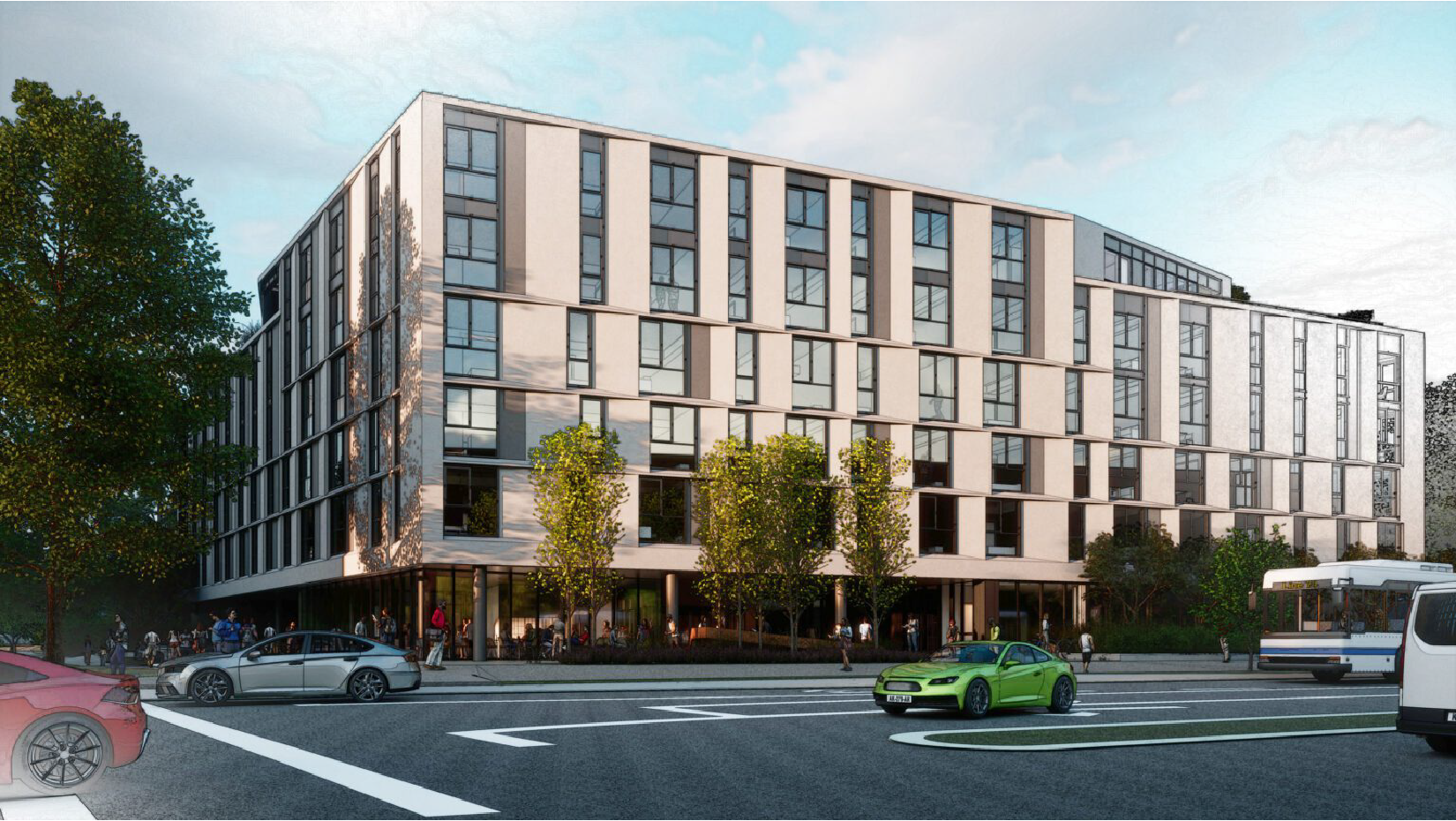
In the fall of 2026, a new multifaceted facility called Menno Hall will open its doors at the gateway to the University of British Columbia in Vancouver, Canada.
The structure itself will be impressive, yet behind every aspect of its physicality is a compelling story of innovation, collaboration, and purpose.
Rooted in History
More than one hundred years earlier, in the 1920s, a Mennonite family fled Russia with the help of Mennonite Central Committee (MCC). Like many refugees of that era, they arrived in Canada with little, settling in a small rural community in order to rebuild their lives from the ground up. That experience—of hope in the midst of hardship—would echo forward across generations.
Decades later, one member of that family, Henry Rempel, would quietly decide that the wealth he had accumulated over a lifetime should return to the agency that helped his family survive.
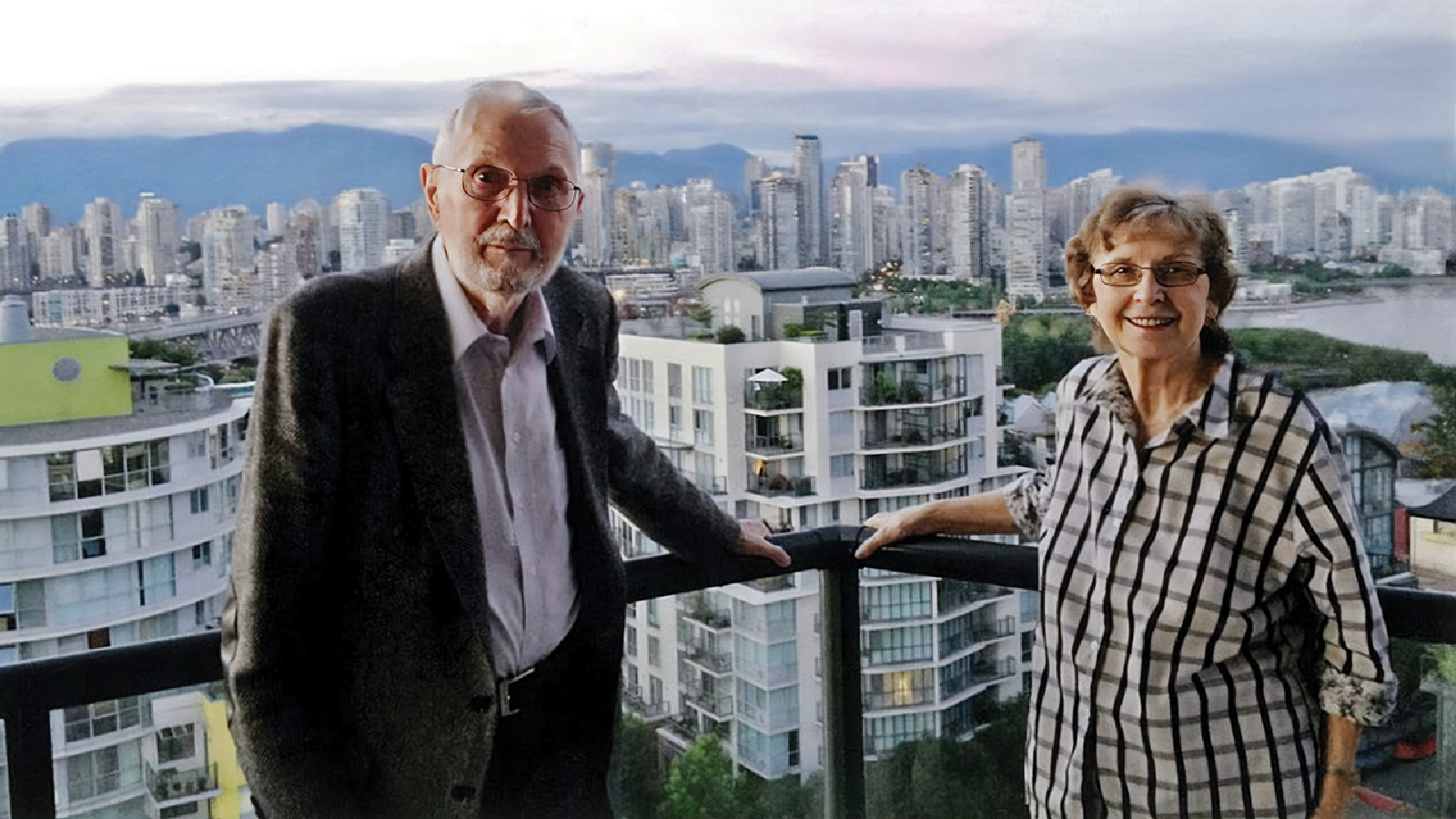
Henry and his wife, Mary, had no children. What they did have was clarity of purpose. They committed that the entirety of their estate would ultimately be given to MCC British Columbia (BC) as a means of generating income to help the poorest of the poor around the world.
There were no naming rights sought, no legacy demanded—just trust.
From Refugee to Entrepreneur to Patron
Henry’s life followed an unlikely arc. He became a child psychologist, working for the province of British Columbia, and spent much of his career supporting vulnerable children. Similarly, Mary was a teacher. After Henry retired at the age of sixty, the couple turned to a lifelong passion: real estate.
What followed was extraordinary. Over roughly fifteen years, Henry and Mary worked as a team and went from owning no investment properties to owning thousands of apartment units across British Columbia and Alberta. Later, well into his seventies and eighties, he began assembling large tracts of land throughout the province, at a time when land was affordable, and few realized how valuable it would eventually become. By the end, the couple had amassed properties valued at over $200 million.
As intended, in 2012, Henry approached MCC BC to begin transferring part of his estate. It soon became clear that this gift was unlike anything MCC had managed before. The organization was built to do relief and development work, not to steward a complex real estate portfolio.
To honour Henry’s trust, and to ensure his gift would be responsibly managed into the future, MCC BC made a pivotal decision: to build a dedicated structure capable of stewarding these assets with care. That decision eventually led to the formation of HyLand Properties, which effectively became MCC’s real estate investment arm.
According to Jay Teichroeb, Senior Advisor and former President with Hyland, the intent of the new management firm was never to preserve capital, but merely to be a vehicle for the generous flow of assets. “That’s the mandate we received from Henry,” Teichroeb explained in a recent interview, “to generate an income from these investments in real estate to support the ongoing mission work of MCC around the globe.”
“That’s the mandate we received from Henry, to generate an income from these investments in real estate to support the ongoing mission work of MCC around the globe.”
Paths Converge
As HyLand began its work, another story was unfolding nearby at UBC.
For decades, the Pax House Society (formerly the Pacific Centre for Discipleship Association) had operated a small off-campus student residence called the Menno Simons Centre, which provided housing for twenty-two UBC students, but carried a much larger vision: forming community rooted in faith, learning, and shared life.
In 2017, an opportunity emerged to expand. “Pax” acquired a small parcel of land on Wesbrook Mall, with hopes of building a replacement residence. But as conversations with planners progressed, and an adjacent Lutheran church property became available, it became clear that this could be something much bigger.
Too big for Pax alone.
At that moment, however, paths converged.
HyLand and Pax entered into a partnership, formalized through a memorandum of understanding. What began as a small student housing expansion evolved into a deeply collaborative project, one that would combine a new student residence, long-term market rental housing, and shared institutional space into a single, integrated vision. They decided to call it Menno Hall.
Innovation as Responsibility
From the outset, Menno Hall was shaped by intention.
The development team included Pax House Society, HyLand Properties, Axiom Builders, and Shape Architecture. Each of these stakeholders brought their own expertise to the table, but all were well aware of the two overarching goals that guided the project:
-
- To generate long-term, sustainable revenue that would support MCC’s global mission
- To create a living environment grounded in community, faith, and service
Every design decision flowed from those commitments.
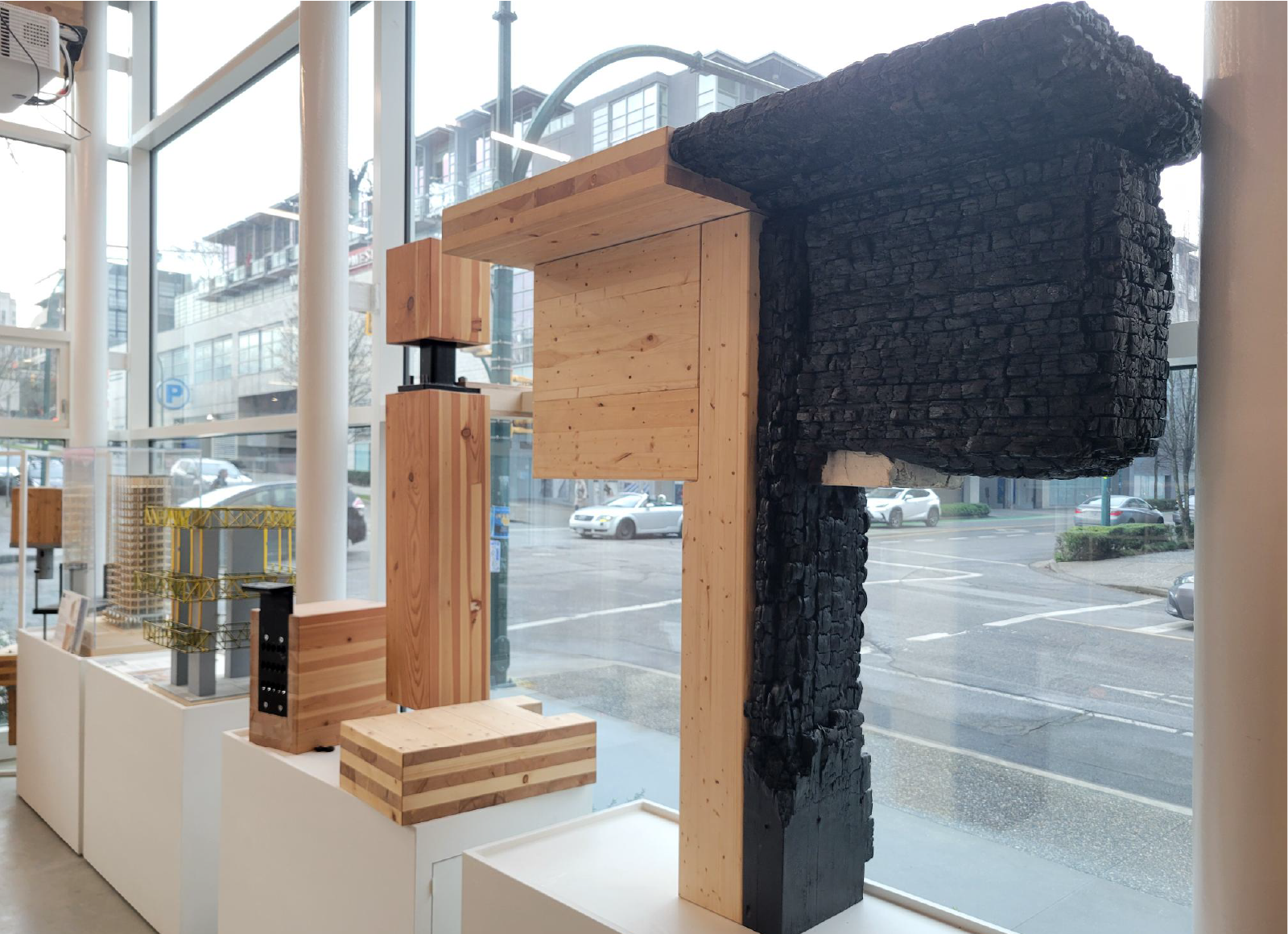
Early on, the team committed to a mass timber approach, as a disciplined response to sustainability goals. Paul Fast, Principal at Fast + Epp was invited to be the Consulting Structural Engineer, due to his reputation as a global leader in mass timber construction and architecturally-exposed structures. According to Fast, since concrete carries such a heavy carbon cost, incorporating mass timber in the design offers a lower-carbon alternative while still meeting performance, fire, and durability requirements.
“Innovation in engineering is a two-pronged approach,” explained Fast. “In being a good steward of the client’s funding, it seeks creative ways to achieve cost-effective, technically robust solutions with enduring value. It also weaves in architectural finesse to create spaces that will provide an aesthetically rich and comfortable ambience for building occupants.”
The building’s cross-laminated timber (CLT) system was developed through close collaboration between Fast as consulting engineer and lead architect, Nick Sully of Shape Architecture.
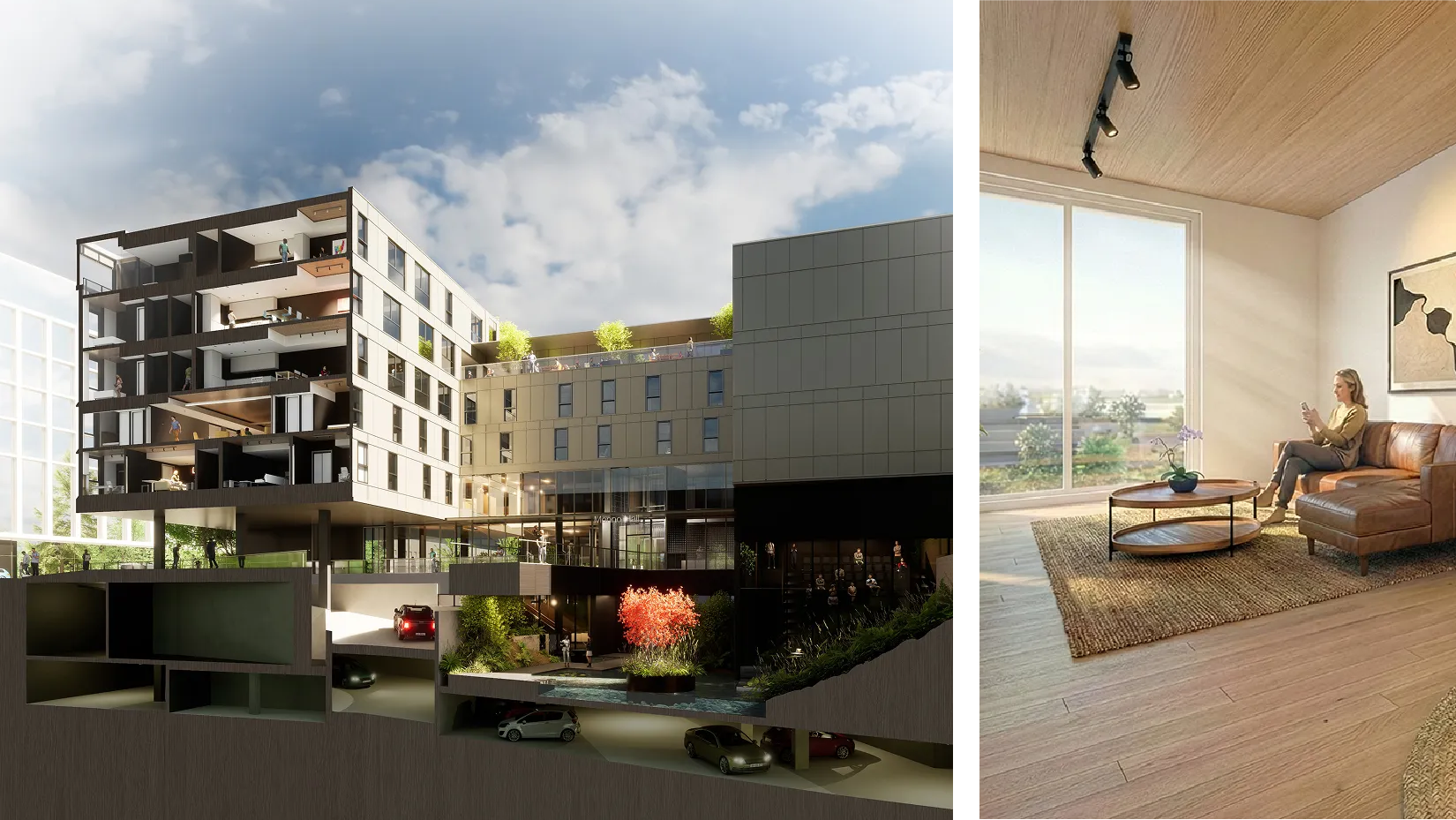
The design balances flexibility with constructability. Fire safety was addressed through a combination of charring calculations, selective exposure, and concrete toppings where required. Even seemingly small decisions, such as eliminating balconies to reduce thermal loss, or transforming a typical underground stormwater tank into a visible courtyard grotto, were guided by the same logic: make environmental systems legible, not hidden.
What emerges is a building that practices sustainability in a way that is quiet, comprehensive, and without shortcuts.
A Necessary Complexity
Zoning was a challenge with Menno Hall, but these constraints were embraced rather than resisted. Where institutional space was required, the development team leaned in, creating areas designated for learning, gathering, and worship—space that could serve students, residents, and the wider community.
-
- Menno Hall was not designed first and programmed later. It was designed around purpose from the beginning. As such, the structure is complex, consisting of three interconnected components:
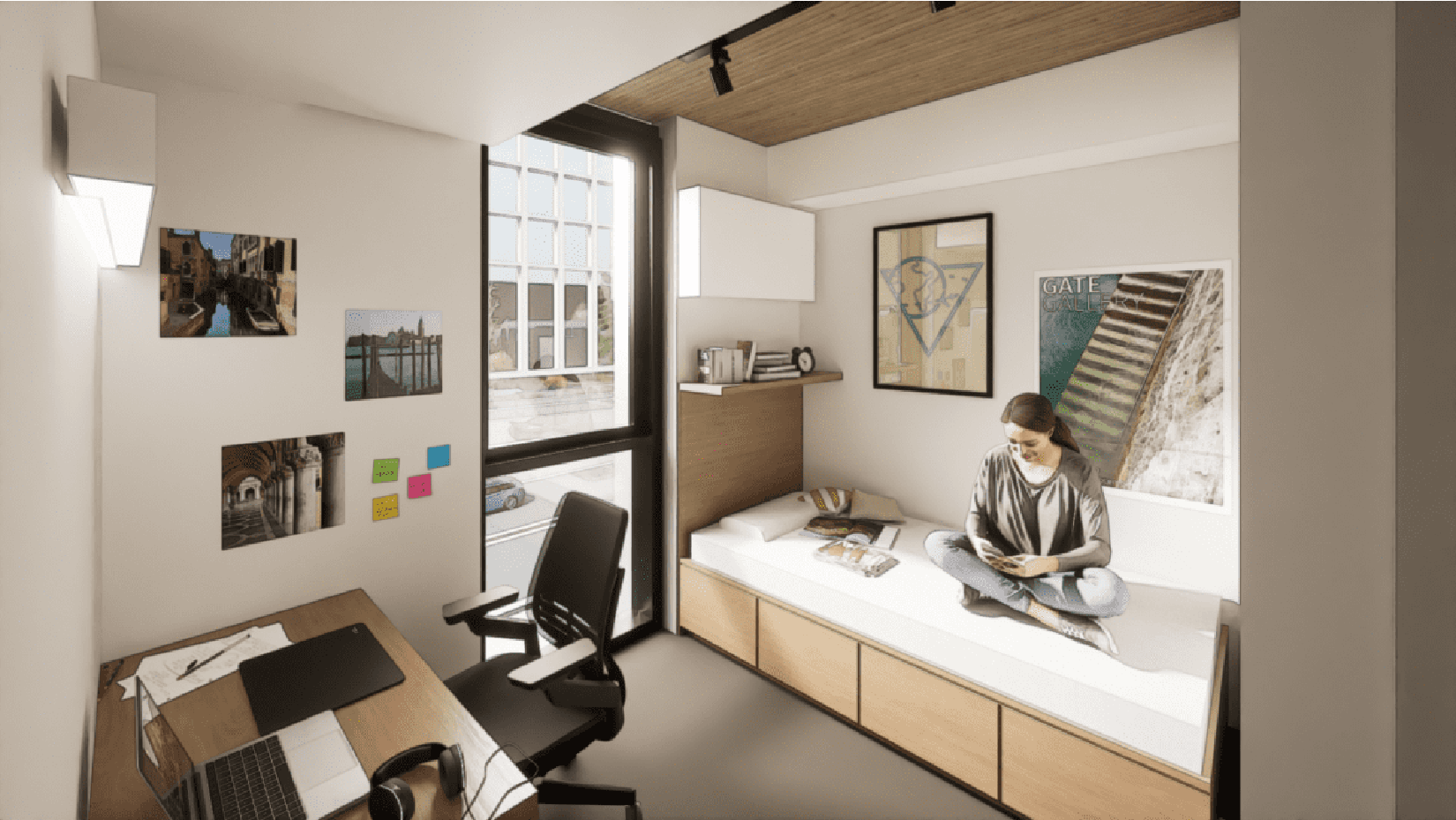
- Pax House, a 105-bed student residence operated by the Pax House Society, continuing a legacy of faith-based student community.
- Haven Apartments, a long-term rental community owned and operated by HyLand, providing steady income to support MCC’s work.
PeaceBridge Institute, a research and education centre, co-created by MCC BC and Pax House Society and focused on practitioners of peace and global development.
Financing was equally unconventional. BC Housing took interest in the project, especially as it was focused on providing housing for the “missing middle” which identified people who are too often left out of affordability conversations. The provincial Crown corporation committed early support for Menno Hall through their Housing Hub program. Then, as the project matured, financing was transitioned to the Canada Mortgage and Housing Corporation (CMHC), the national agency that also noted the value of the project and provided support through their Apartment Construction Loan Program.
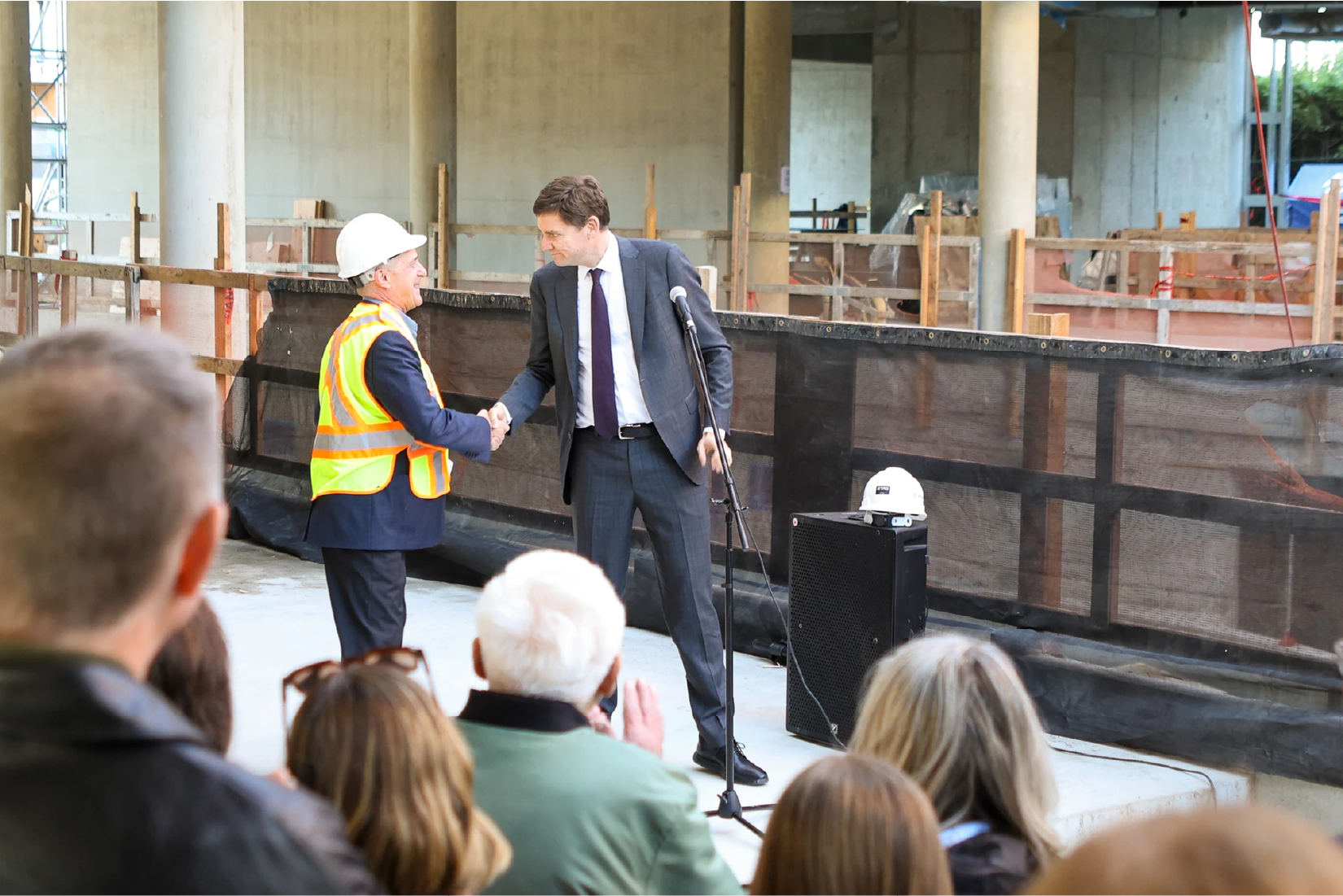
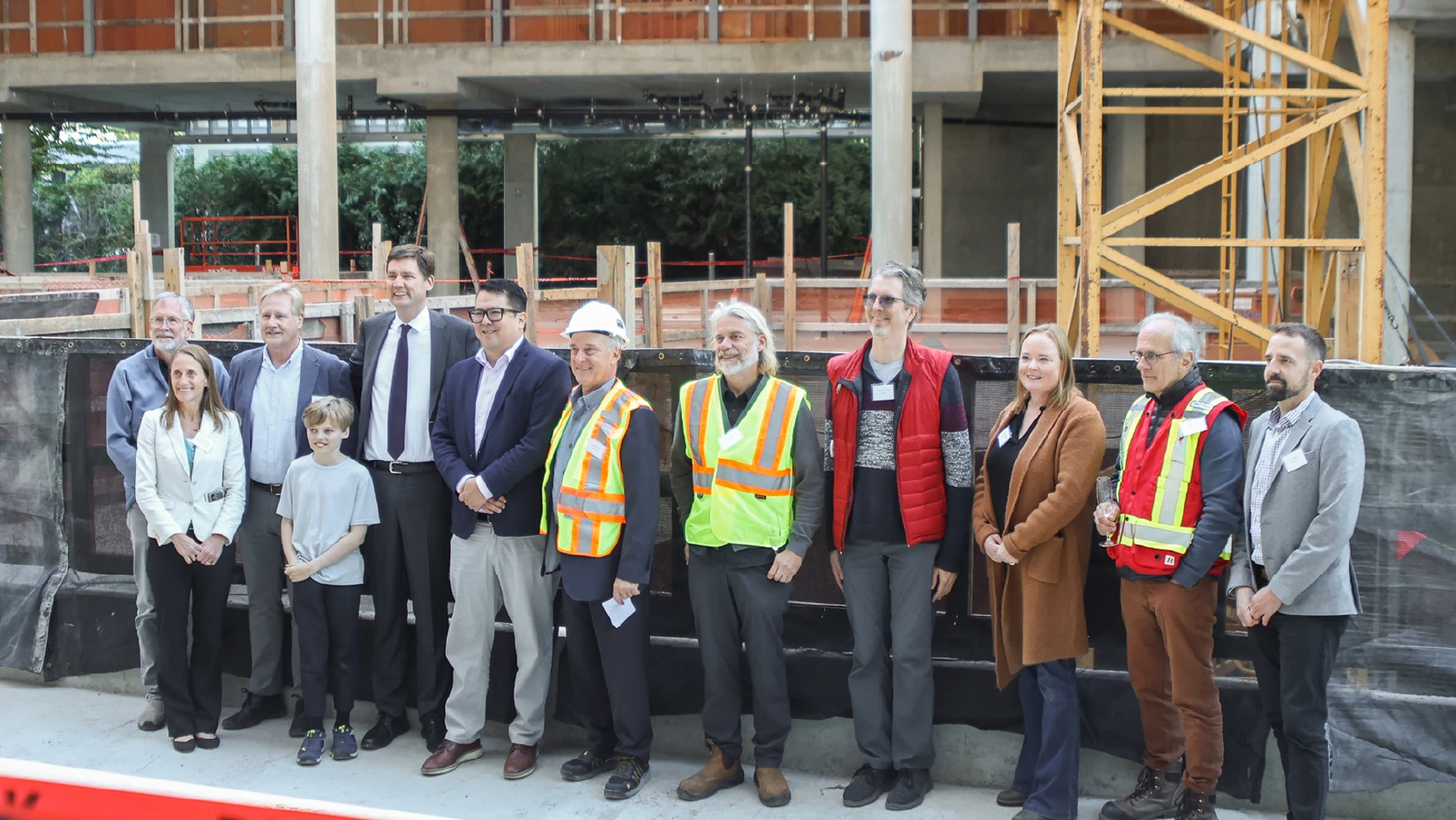
At each stage of the project, key people recognized the significance of Menno Hall and offered their support, which was especially important through years of zoning complexity and rising costs. Whether it was the development team, government officials like local MLA, David Eby, or financing bodies like BC Housing and CMHC, everyone stayed committed not because the project was easy — but because they saw its worth.
A Place That Shapes People and Fosters Community
Yet Menno Hall’s deepest impact may not be structural or organizational.
For Britt Suchynsky, who lived at the former Menno Simon Centre while studying at UBC, the value of Menno was never just about housing. It was formative community with shared meals, intentional rhythms, retreats, friendships forged across differences.
“It wasn’t just where I lived,” Britt reflected in a recent interview. “It shaped how I learned to live with people, some very similar to me, and some very different. Some of my closest friendships still come from that time.”
“It wasn’t just where I lived. It shaped how I learned to live with people, some very similar to me, and some very different. Some of my closest friendships still come from that time.”
Those relationships extended beyond the residence itself. After leaving Menno, Britt and others went on to form community houses elsewhere in Vancouver, carrying forward patterns of shared life first learned there. In that sense, Menno functioned not just as a residence, but as a launching point.
Britt is realistic about the transition to Pax House within Menno Hall. The scale will be larger. The context more public. The expressions of faith more diverse. Still, she sees continuity beneath the change.
“If you need community, if you want to be shaped by living intentionally with others, I would absolutely recommend it,” she said. “You don’t get many seasons like that in life. You shouldn’t waste them.”
Enduring Purpose
Menno Hall stands today as a rare kind of project: one where design, finance, faith, and community are not competing agendas, but interdependent ones.
More than a building, it is the physical expression of a long chain of trust, from refugees helped nearly a century ago, to a couple who gave everything away, to organizations, developers, and designers willing to collaborate across complexity for the sake of something larger than themselves.
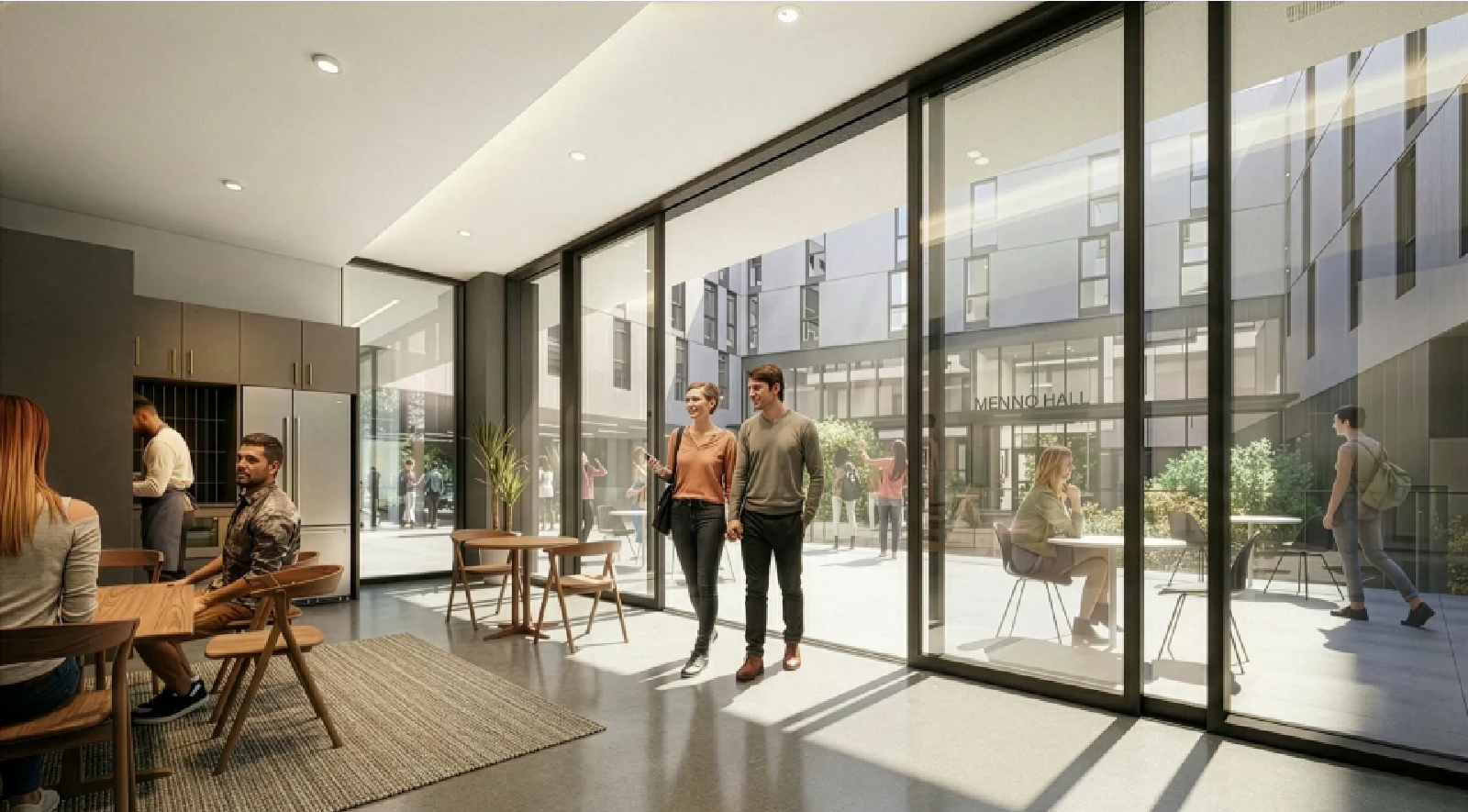
Menno Hall has been shaped by collaboration rather than control, by innovation grounded in responsibility, and by purpose that looks far beyond its own walls. Over the next century, thousands of students and residents will pass through its rooms, courtyards, and shared spaces, many unaware of the layered decisions that made it all possible.
If Menno Hall succeeds, its legacy will not be measured only in units housed or carbon saved. It will be found in quieter outcomes: lives shaped, communities strengthened, and convictions proven true.
Ready to reach your potential?

